
Identify variables in an experiment by their job
To identify variables in an experiment, read the comparison before labelling the quantities. Which factor is deliberately varied? Which outcome is recorded, and how? Which conditions should stay consistent? If your labels are swapped, give Lirno the question and your attempt, ask for one targeted check, then justify the corrected roles yourself. This guide works through an invented worksheet without claiming that a polished AI answer proves the design is sound.
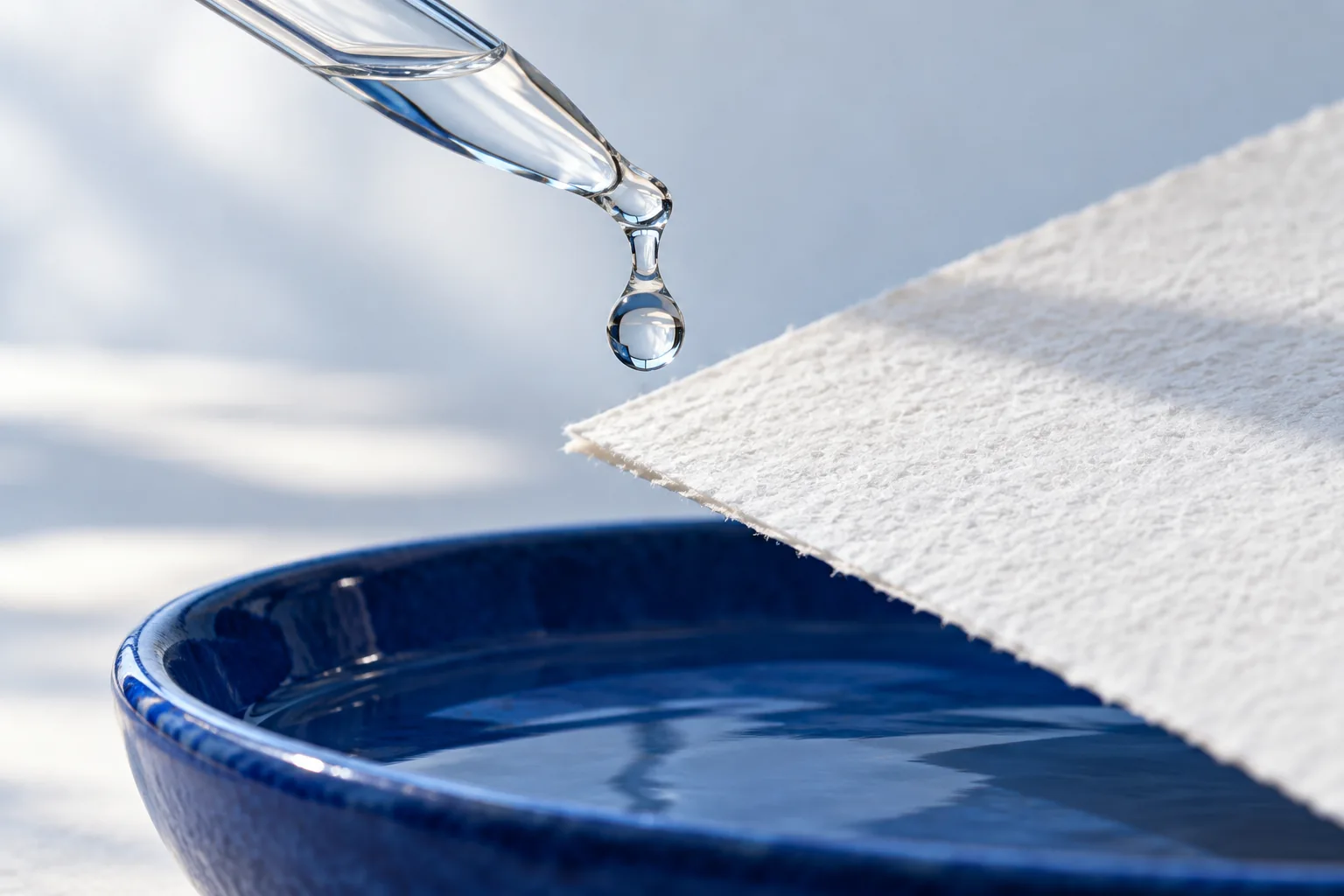
Identify variables in an experiment from the question
Imagine you have written “independent variable: time; dependent variable: paper type” on a worksheet. Both terms appear in the question, but that is not enough to assign their roles. Start with the purpose of the comparison rather than the order of the words, the table columns or a rule that time always belongs in one category.
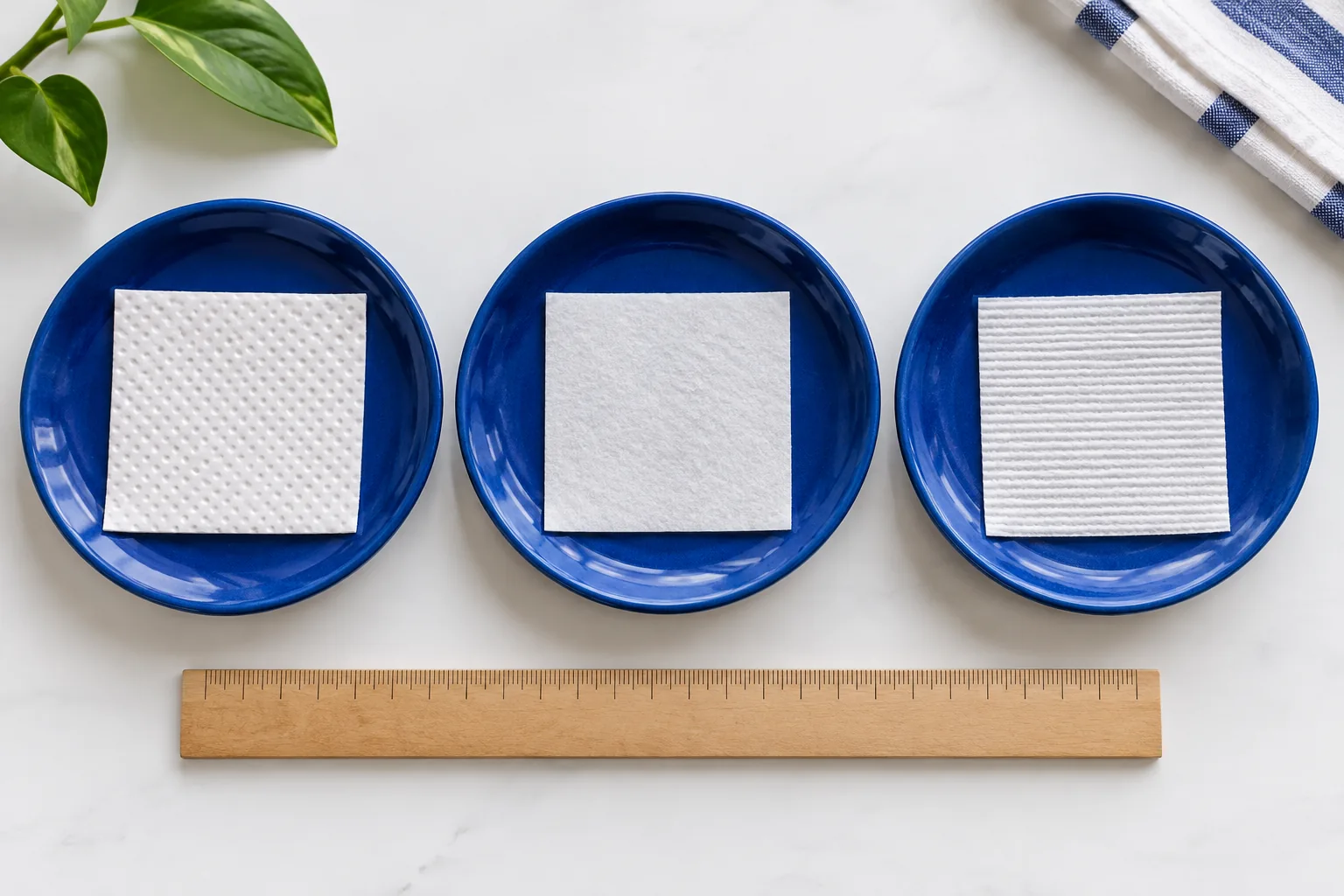
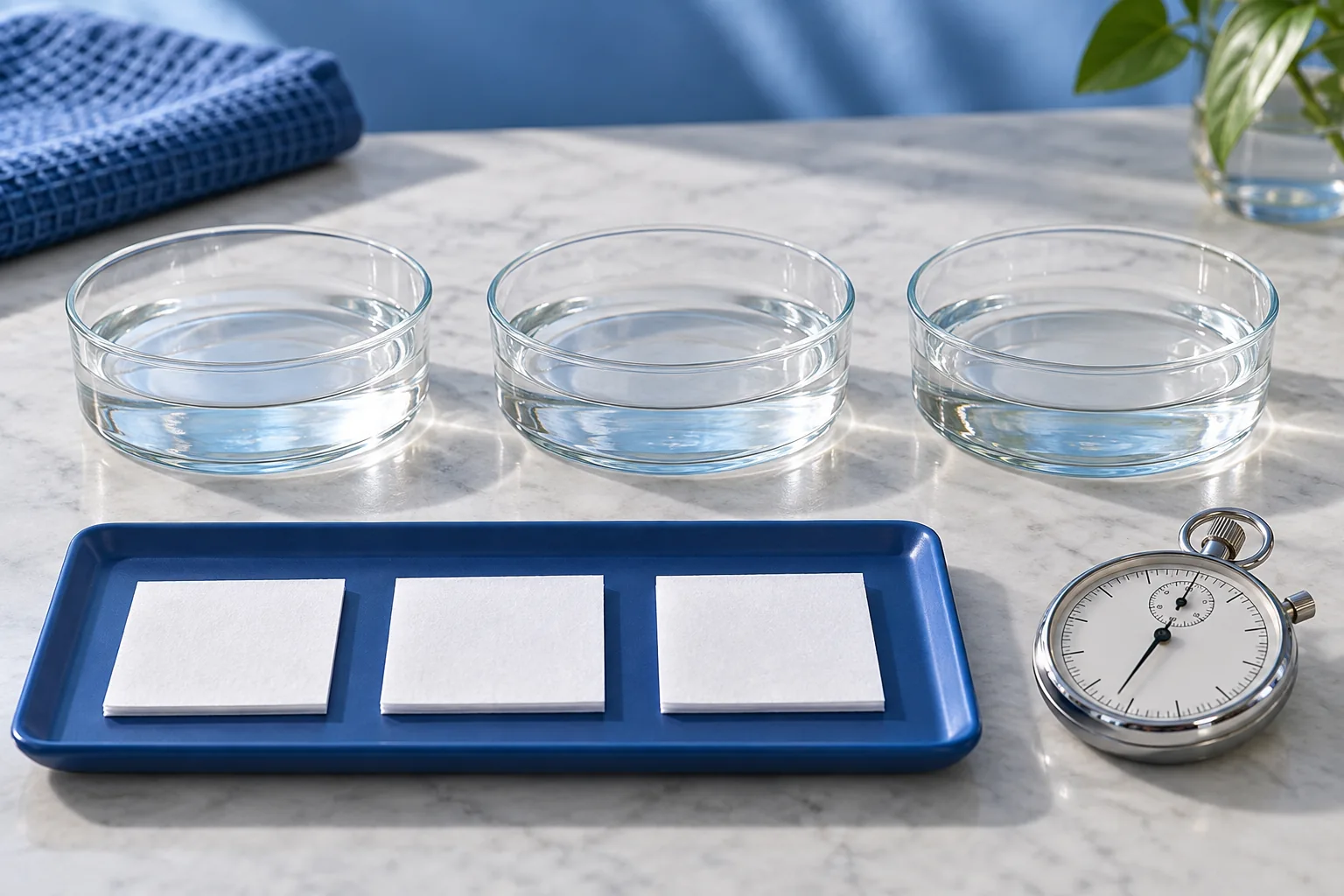
Our invented task asks: “How does paper type affect the mass of water retained by equal-area samples under the same contact and draining conditions?” The experimenter chooses paper types A, B and C. Each square is 5 cm by 5 cm. The supplied method specifies 15 seconds of water contact and five seconds of draining before weighing. These are worksheet conditions, not observations from a study we conducted.
Paper type is deliberately varied. Retained-water mass is the outcome. Contact duration, draining duration and sample area are controlled conditions in this design. The University of Chicago’s variable-selection guidance distinguishes the changed factor, measured response and conditions held steady. Our science homework guide provides the broader starting point for reading a task. Here, the goal is to explain why each label fits this particular comparison.
Name an outcome that the method actually measures
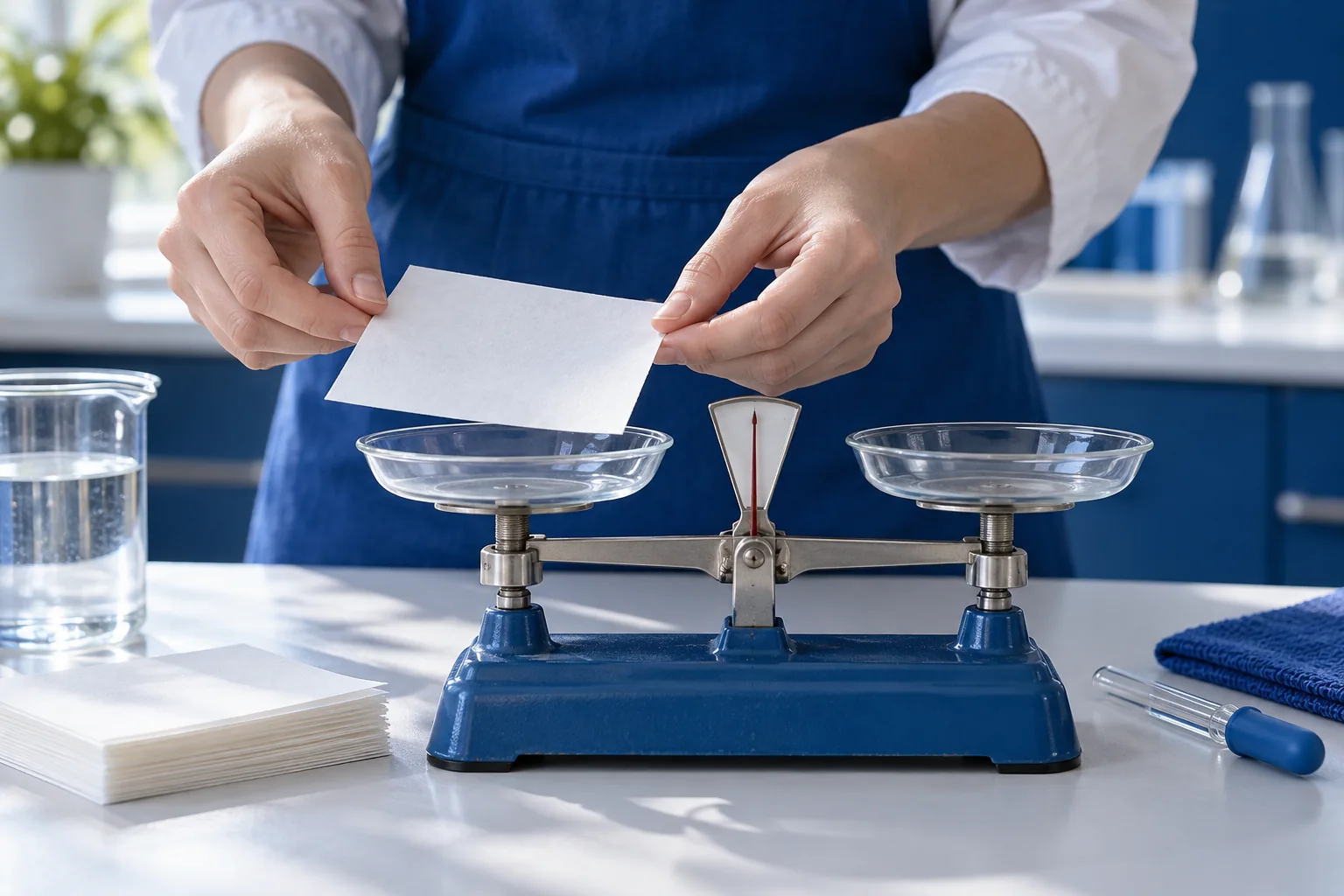
“Absorbency” is too vague on its own. For this worksheet, define the outcome as the mass of water retained after the specified contact and draining times. Calculate it as wet sample mass minus dry sample mass. That definition matters: the balance reading includes the paper itself. A heavier wet sample does not automatically contain more water.
The hypothetical data below illustrate the calculation for one sample of each type. They are invented numbers, not product tests, evidence about real brands or a claim that one material generally performs best.
| Paper type | Dry mass (g) | Wet mass (g) | Retained water (g) |
|---|---|---|---|
| A | 0.40 | 2.90 | 2.50 |
| B | 0.55 | 3.55 | 3.00 |
| C | 0.70 | 3.10 | 2.40 |
On a small screen, scroll the table sideways to see every column.
For B, 3.55 − 0.55 = 3.00 g of retained water. The dry mass is measured to perform that subtraction; it is not the factor deliberately changed by the worksheet. The independent variable is a category, paper type, so it does not need a numerical unit.
Keep the interpretation tied to the method. Water left on the surface after draining contributes to this operational outcome too. These figures do not reveal exactly how much entered individual fibres. Photos in this article illustrate the concepts and supply none of the data. A precise definition prevents an appealing image or a familiar word from replacing what was actually recorded.
Ask Lirno to inspect the mismatch in your attempt
Lirno’s official tutor page describes help with typed questions, science topics and follow-up explanations. Use that conversation for a small diagnostic job. Enter the exact question, the fixed conditions and your tentative labels. If you start from a photo, check the captured words and numbers against the worksheet before discussing the reasoning.
An editorial prompt you can adapt is: “The task compares paper types A, B and C using equal-area pieces, 15 seconds of contact and five seconds of draining. It calculates retained-water mass from wet minus dry mass. I labelled time independent and paper type dependent. Point to the first mismatch between my labels and the design. Ask one question that helps me correct it; do not write the whole answer.”
This is a suggested request, not a transcript of a product test or a promise about the response. It gives the tutor enough context to distinguish the quantity being timed from the factor being varied. Avoid sending only “What are the variables?” A generic definition may sound correct while leaving your specific confusion untouched. Show the attempt you want checked and the evidence the check must use.
Correct the label with a reason you can defend
A useful checking question might be: “Does contact time differ between paper types in the supplied method?” Your answer should come from the question: no, it is fixed at 15 seconds. The chosen paper category differs instead. That contrast repairs the first label without needing a rewritten worksheet. If the feedback focuses on an unstated change, return to the original wording.
Now justify the outcome: the experiment records how much water remains with each sample under the stated method. Write your own compact answer: “Paper type is independent because the investigator selects different types. Retained-water mass in grams is dependent because it is the response being compared. Contact time, draining time and sample area should remain consistent.” Add the other relevant conditions actually supplied by your assignment.
Do not accept “the dependent variable must increase” as a definition. A measured response remains dependent even if all paper types give the same result. Likewise, measurement alone does not make a quantity independent: dry mass and contact time can both be measured for different jobs. If you need to discuss a specific correction, the focused tutoring guide shows how to keep your attempt and the missing connection together.
Try the next step with your own homework.
Bring your question and attempt into Lirno. Ask for a hint, discuss the reasoning, then try the next step yourself.
Replace “keep everything the same” with testable conditions
Name conditions that could offer another explanation for a difference. For this paper comparison, consider sample area, water temperature and depth, contact method, contact duration, draining duration and the weighing method. A good answer explains their relevance: more contact time might change the retained amount, so allowing it to differ systematically by paper type would blur the intended comparison.
Do not claim that every property of the papers is identical. Different types may have different thicknesses, textures and dry masses. With equal area, those differences are part of the material comparison. Saying that both area and dry mass were held constant would add a condition the task does not supply. Whether the question concerns a product type as a whole or one isolated property changes what a defensible design needs.
A controlled variable is also different from a control group. The former is a condition kept consistent; the latter is a designated comparison condition or group. None of A, B and C automatically becomes “the control” because it is listed first. If the worksheet requires a baseline, identify the stated reference or say what information is missing. Do not invent a fourth untreated group simply to complete a familiar vocabulary list.
Separate a correct label from a strong conclusion
The three invented rows allow a calculation, not a reliable general ranking of paper types. One sample per category gives no estimate of variation within that category. Repeated fresh samples would help reveal that variation; a consistent method and a planned trial order would also matter. Identifying the independent and dependent variables is a necessary part of reading the design, not proof that every weakness has been solved.
Suppose three further invented B samples retained 3.0, 2.8 and 3.2 g. Their mean is (3.0 + 2.8 + 3.2)/3 = 3.0 g. The spread remains relevant. Averaging does not establish accuracy, remove systematic draining differences or show that a difference from another category is statistically meaningful. Keep any real observations intact and follow the analysis required by the task.
Ask a follow-up only where it helps: “Which stated condition would make the comparison unfair if it differed between A and B?” Check the suggested condition against the method. A tutor can flag a plausible concern, but it cannot recover an unrecorded measurement or establish what happened in an experiment it did not observe. The final answer should separate supplied facts, reasonable concerns and missing information.
Let the same quantity take a different role
Change the question: “For paper type B, how does contact duration affect retained-water mass?” The design now compares 15, 30 and 45 seconds while holding paper type fixed. Contact duration becomes the independent variable. The retained-water outcome stays dependent, and paper type becomes a controlled condition. The words have not changed their meaning; their jobs in the comparison have changed.
Try explaining this version without looking at the earlier labels or the chat. State the deliberately varied values, the recorded outcome and at least two relevant fixed conditions. Do not say that time is independent because it usually goes on a graph’s horizontal axis. The design establishes its role first; graph choices follow that design. A measured duration can be an outcome in a different question, such as time until a specified event.
For a fresh transfer task, imagine paper bridges with different fold counts. The outcome is the number of identical washers supported before a defined one-centimetre deflection. Identify fold count as the chosen factor and washer count as the response. Relevant conditions include paper size, support gap and load position. No load results are supplied, so this exercise tests role identification without asking you to invent a winning design.
Close the feedback loop with an independent answer
Return to your original worksheet and write the answer without the tutor response in view. Point to the words that establish each role. Include units or a category description, and define the measurement when a broad term such as “growth,” “strength” or “absorbency” could mean several things. If the prompt supplies only a table, say when the experimental comparison cannot be reconstructed from those numbers alone.
A final check has three parts: can you name what differs deliberately, describe what is recorded and justify a condition kept consistent? Then alter one part of the question and repeat the check. A definition copied correctly is weaker evidence of this specific skill than explaining why time changes roles between our two paper designs.
Keep a short record of the original confusion and one fresh test using the method in the mistake-review guide. For example: “I labelled the first measured number independent. Next time I will identify the chosen comparison before reading the result column.” This gives your next study session a concrete decision to revisit. Follow your assignment’s rules for assistance and submit an explanation whose reasoning you can reproduce.

Questions about this method
Is the independent variable always something measured?
It should be specified clearly, but its role comes from what is deliberately varied in this experimental comparison. A category such as paper type can be independent. Several other quantities may also be measured as outcomes, checks or conditions without becoming independent.
Can a dependent variable stay unchanged?
Yes. It is the response selected for observation, whether it rises, falls or stays similar across conditions. An unchanged result does not swap the variable roles or prove that the experiment was performed correctly.
What if Lirno and my worksheet use different labels?
Compare the exact question, the stated changed factor and the measurement definition. Ask which words support the proposed label. If the task is ambiguous, identify what is missing and check the terminology expected in your course rather than accepting a confident label without a reason.